Juxtaposing The Tale of Genji and The Tale of the Heike

To read The Tale of Genji beside The Tale of the Heike is to watch the emotional center of Japanese literature migrate under pressure. These texts do not merely belong to different genres or periods; they encode fundamentally different ways of understanding desire, power, and impermanence. Genji emerges from a courtly world organized around proximity, aesthetic sensitivity, and reputational risk, while Heike speaks from a warrior society shaped by hierarchy, violence, and collective destiny. Together, they mark a shift not only in political order, but in how intimacy itself is imagined, narrated, and disciplined.
In The Tale of Genji, desire is ambient. It arises from shared space, cultivated sensitivity, and the delicate choreography of approach and withdrawal. Genji’s world assumes that intimacy will happen wherever beauty, access, and rank coincide. What matters is not the declaration of feeling, but the management of its aftermath. Love is rarely named as commitment and never stabilized as resolution. Instead, attachment unfolds as a series of moments—glances, poems, visits, silences—each weighted with consequence. The novel lingers in the emotional wake of these encounters, returning again and again to women left waiting, displaced, or quietly ruined by attachments that were never meant to last.
This attention to aftermath is inseparable from the novel’s Buddhist sensibility. Impermanence is not a moral lesson imposed on the story; it is the story’s governing condition. Every beautiful moment already contains its ending. Every attachment binds unequal parties in ways that will eventually produce loss. Genji himself, despite his freedom and privilege, is not spared. His later life is marked by fatigue and regret, his pleasures dulled by accumulation. The narrative’s refusal to end with his death—its widening into repetition rather than closure—underscores its central claim: desire does not resolve. It persists, reproducing harm and longing across generations.

The emotional texture of Genji is therefore one of quiet erosion. Power operates through beauty and access rather than command. Harm occurs not through spectacle, but through neglect, displacement, and the slow narrowing of women’s lives. Violence is largely emotional and social, administered through silence, gossip, and abandonment. The novel’s danger lies in how gently it moves, how easily pleasure slides into damage without ever announcing itself as transgression.
The Tale of the Heike speaks from a different world entirely.
Where Genji dwells in interiors—bedchambers, corridors, moonlit gardens—Heike unfolds on roads, battlefields, and burning capitals. Desire does not circulate freely here. It is subordinated to loyalty, lineage, and fate. The emotional life of Heike is collective rather than intimate, shaped by clan allegiance and historical catastrophe. Individuals matter, but they matter as exemplars of rise and fall, not as sites of ongoing attachment.
Yet Heike is no less Buddhist than Genji. If anything, its vision of impermanence is harsher.
The opening lines announce this immediately: the sound of the Gion Shōja bells tolls the impermanence of all things. Glory is not merely unstable; it is doomed. Where Genji traces impermanence through private sorrow and remembered intimacy, Heike stages it through mass death, exile, and annihilation. The fall of the Taira clan is not the consequence of individual attachment, but of collective arrogance and karmic accumulation. Impermanence is no longer intimate. It is historical.
This shift reshapes how desire appears—or fails to appear—in the narrative.
In Heike, erotic longing is largely absent, not because desire has disappeared, but because it has been displaced. The warrior world cannot afford ambient intimacy. Emotional excess threatens discipline. Vulnerability endangers survival. Bonds that matter are those of lord and retainer, father and son, brother and brother. Even grief is regulated, expressed through ritualized lament rather than lingering interiority. When tenderness appears, it is often framed as weakness, something to be overcome in the face of duty.
Women, too, occupy a different position.
In Genji, women absorb the costs of desire, their lives shaped and diminished by attachment to powerful men. In Heike, women are more often figures of loss and transition: daughters married for alliance, mothers mourning dead sons, nuns retreating into religious life after political collapse. Their suffering is no less real, but it is less individualized. The narrative does not dwell on their interior states so much as on what they represent within the larger pattern of rise and fall. The move from court to battlefield flattens interiority into symbol.
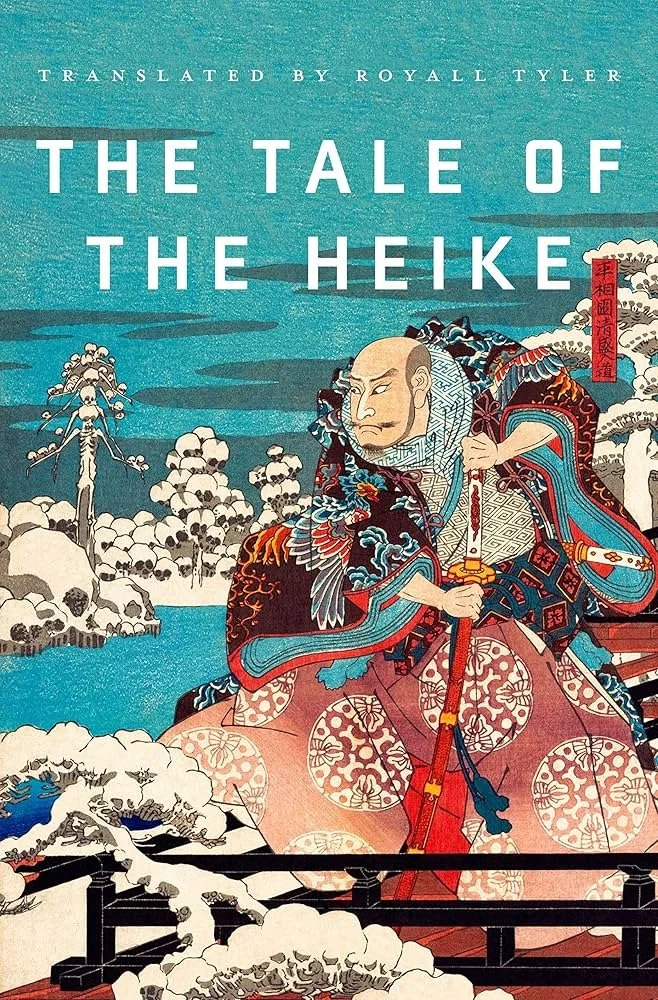
What connects the two texts is not their treatment of desire, but their shared insistence on impermanence as truth. Genji asks what impermanence does to intimacy. Heike asks what it does to power.
In the courtly world, impermanence destabilizes relationships, making attachment dangerous precisely because it feels meaningful. In the warrior world, impermanence justifies violence and sacrifice, rendering individual feeling secondary to collective fate. Both texts refuse consolation, but they do so differently. Genji withholds emotional resolution. Heike withholds survival.
This difference reveals how social structure reshapes narrative possibility.
The Heian court could afford ambiguity. Its power was reputational, aesthetic, and diffuse. Desire could circulate quietly because consequences unfolded slowly. The warrior order demanded clarity. Loyalty had to be visible. Allegiance had to be absolute. Desire that did not serve hierarchy became a liability. Intimacy hardened into obligation. Emotion was trained into discipline.
In this sense, Genji and Heike do not simply represent different genres; they represent different economies of feeling.
Genji belongs to a world where harm happens through closeness and neglect. Heike belongs to a world where harm happens through command and annihilation. One records the damage of desire. The other records the cost of power. Both are Buddhist, but one whispers and the other tolls.
Reading them together makes clear that the transformation from court to warrior society did not merely change politics; it reorganized the emotional life of Japan. Desire moved from ambient to regulated, from private risk to collective irrelevance. Impermanence moved from the bedroom to the battlefield. Suffering moved from women’s rooms to burning capitals.
Neither text offers redemption. Neither promises transcendence.
What they offer instead is diagnosis.
The Tale of Genji diagnoses a world where intimacy is inseparable from harm, where love binds unevenly and dissolves slowly. The Tale of the Heike diagnoses a world where power accelerates impermanence, where glory collapses suddenly and completely. Together, they show how literature tracks not only historical change, but the reorganization of feeling itself.
To juxtapose Genji and Heike is to watch Japanese literature pivot from longing to loss, from attachment to fate, from interior sorrow to collective catastrophe. It is to see how desire is first allowed to circulate and then forced to disappear into structure, duty, and death.
The bells toll in both worlds.
They simply sound at different distances.
