Izumi Shikibu and the Cost of Desire
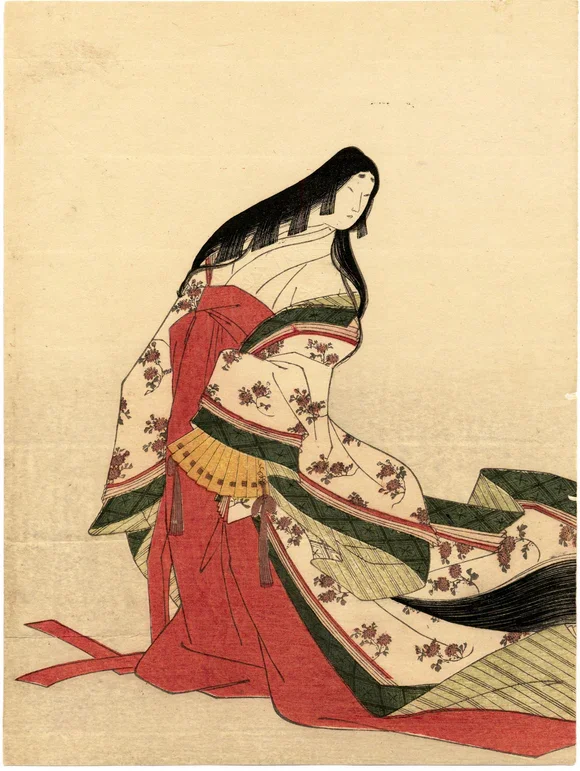
Izumi Shikibu writes with the knowledge that desire is already a debt.From the opening movements of her diary, longing is framed not as discovery but as transgression—an attachment entered knowingly, with full awareness of its cost. She does not stumble into passion. She recognizes it as a violation of the Buddhist order she believes governs the world, and she follows it anyway.
Her writing unfolds under the shadow of karma. Every exchange, every night of closeness, every poem sent or unanswered carries consequence beyond the moment. Desire is not merely emotional or social; it is metaphysical. To love intensely is to bind oneself to future suffering, to accrue unseen penalties that will ripen later in illness, loss, or rebirth. Izumi knows this. She names it. And still, she cannot release her attachment.
Early in the diary, she gives voice to the exhaustion of this struggle:
“If I thought of you less,
I might still survive.”
Survival here is not rhetorical. Desire threatens her bodily, spiritually, and existentially. It erodes sleep, composure, and prayer alike. Sexuality is felt not through physical description, but through its effects: restlessness at night, terror at dawn, the collapse that follows separation. The body appears as something acted upon—strained by longing, hollowed by absence.
The affair itself unfolds through poetry, exchanged under cover of darkness, mediated by servants, weighed for implication. Each poem is an act of risk. To write is to invite further attachment. To receive a reply is to deepen it. To be ignored is its own form of torment.
Izumi captures this double bind with devastating clarity:
“I know this path leads only to sorrow—
yet my feet will not turn back.”
The language is explicitly Buddhist. A path leads somewhere. She knows where it ends. Knowledge does not save her. Desire overrides doctrine. Insight does not produce detachment; it sharpens despair.
This terror would have been intelligible to her contemporaries, but it would not have been shared equally.
In the same courtly world, Sei Shōnagon treats desire as something that can be governed—shaped by taste, timing, and withdrawal. Her confidence rests on the belief that discernment protects the self: that knowing when to stop, when to turn away, preserves dignity and equilibrium. Desire, in that register, becomes dangerous only when mishandled.
Izumi knows no such protection. For her, desire does not sharpen perception; it overwhelms it. The moment of attachment is already the moment of exposure. There is no graceful exit, no safe threshold. What begins as longing immediately accrues consequence—social, emotional, karmic.
Murasaki Shikibu, too, understands attachment as perilous, but she approaches it through duration and aftermath. In her world, desire settles slowly into regret, guilt, and sorrow. Suffering accumulates over time, shaped by memory and impermanence. There is room for reflection, for moral weight to emerge gradually, for the self to observe its own entanglement.
Izumi has no such distance.
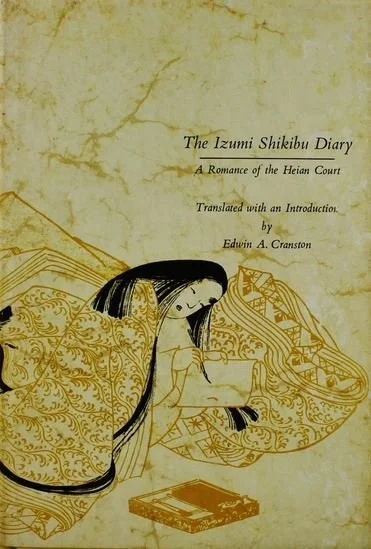
She writes from inside the blaze, while longing and fear remain inseparable. Buddhist insight does not grant her perspective; it sharpens her terror. She knows precisely what attachment means within the moral logic of her faith—and exactly how far she is from meeting its demands.
Eroticism in Izumi’s diary is inseparable from fear.
Moments of intimacy are followed almost immediately by dread—dread of exposure, of abandonment, of karmic punishment. Love does not bring ease. It produces vigilance. She waits for messages with the same intensity she waits for signs of divine retribution. Silence from a lover and silence from the Buddha carry equal weight.
Buddhism enters her writing not as philosophy, but as accusation.
She worries openly about hell realms, about rebirth shaped by passion, about having squandered her human life on attachment. Prayer appears again and again, but never with confidence. She prays because she is afraid. She prays because she cannot stop wanting. Religion does not offer her transcendence; it offers her language for terror.
And yet, the terror does not end desire.
Izumi does not renounce the affair in triumph. She does not narrate conversion. Instead, she oscillates endlessly between erotic pull and religious recoil. One night she writes with urgency and longing; the next she castigates herself for spiritual failure. The diary refuses resolution. Attachment persists even as it is condemned.
At one point, she admits the inevitability of her return:
“Even knowing how it ends,
I could not help myself.”
This is not romantic fatalism. It is karmic realism. Izumi understands herself as caught in causes and conditions larger than willpower. Desire is not framed as rebellion, but as entanglement—a knot formed long before this life, tightening now beyond her control.
The social world offers no refuge.
Her love is visible. Servants know. Rumors circulate. Reputation frays. The consequences of desire fall unevenly, and she is keenly aware of this imbalance. Men move freely. She remains marked. Sexuality is not private; it is public, judged, remembered.
What the diary ultimately preserves is not passion, but exposure.
Izumi writes because writing is the only place where contradiction can exist without correction—where devotion and desire can stand side by side without being resolved into lesson. She does not claim wisdom. She does not claim forgiveness. She records the truth of wanting in a universe that punishes attachment.
Her authority lies precisely there.
Not in moral clarity.
Not in release.
But in her refusal to pretend that Buddhist knowledge alone can extinguish erotic life.
Izumi Shikibu leaves us with a vision of desire as karmic force—beautiful, terrifying, and binding. It does not redeem. It does not instruct. It endures, shaping the soul even as it threatens to undo it.
And she tells the truth about that cost.
