The Thirty-Six Immortal Women Poets (女房三十六歌仙, Nyōbō Sanjūrokkasen) names a lineage of court women whose poetry defined classical Japanese refinement. Compiled in the Kamakura period from Heian precedents, the canon preserves voices for whom poetry functioned as correspondence, reputation, and survival within the imperial court.
Each plate is a poised pairing: on the left, a portrait of one of the thirty-six poets active during the Heian (794–1185) and Kamakura (1185–1333) periods; on the right, one of her poems. From the ninth through the twelfth centuries, their verse shaped court culture and was later imitated across painting, calligraphy, and design.
The Thirty-Six Immortal Women Poets
Five poets—Ono no Komachi, Lady Ise, Nakatsukasa, Saigū no Nyōgo, and Kodai no Kimi—had already been canonized in Fujiwara no Kintō’s Thirty-Six Immortals of Poetry (1113), affirming women’s foundational role in court literature. Later figures, including Michitsuna no Haha and Fujiwara no Shunzei no Musume, extend that legacy into the Kamakura era.
Together, the poems and portraits preserve a tradition at its height—before changing power structures narrowed women’s access to literary authority—leaving a visual and textual record of wit, restraint, longing, and authorship forged within the exacting world of the court.
Images: MET Museum, public domain
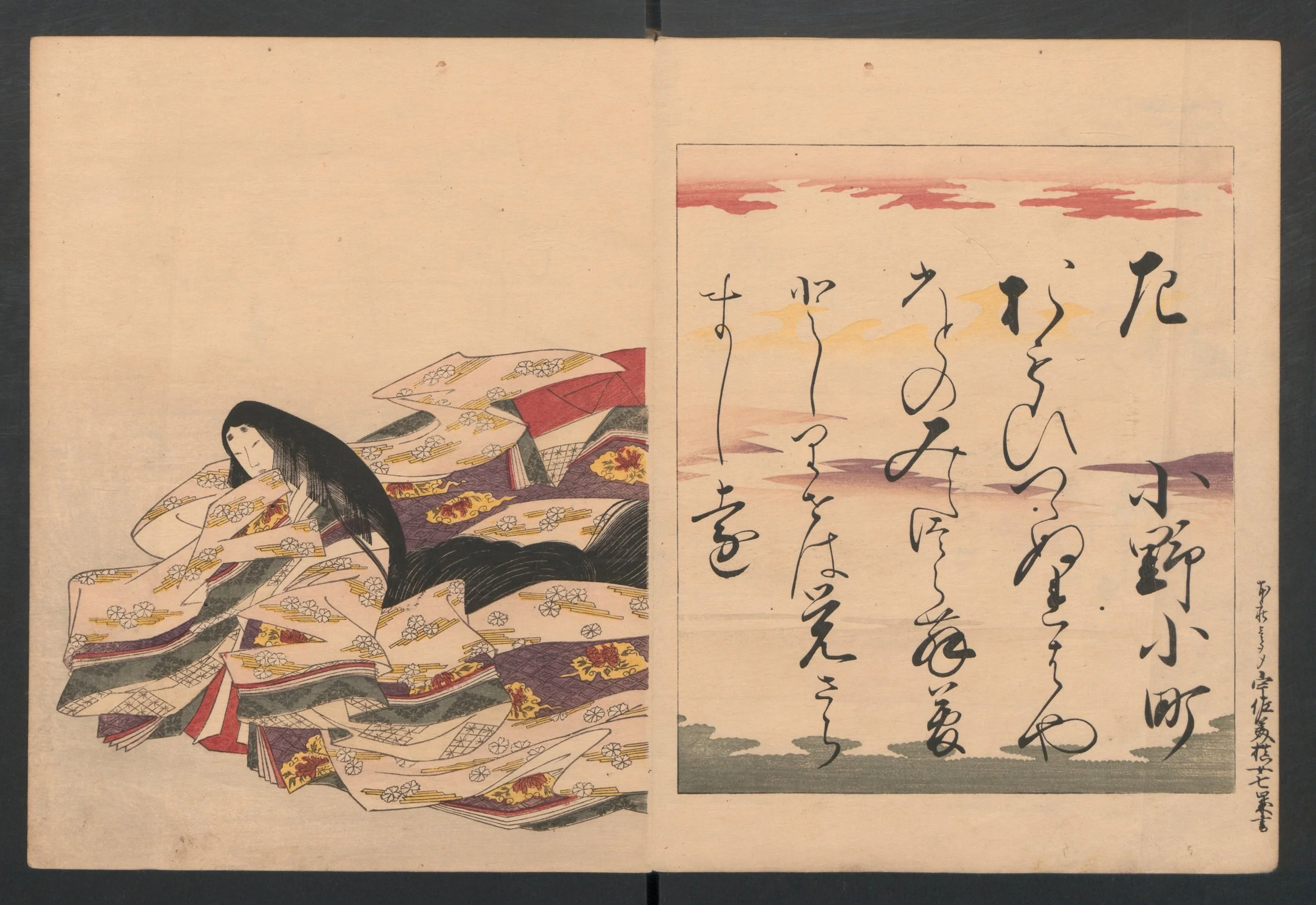
Ono no Komachi 小野小町

Lady Ise 伊勢

Nakatsukasa 中務
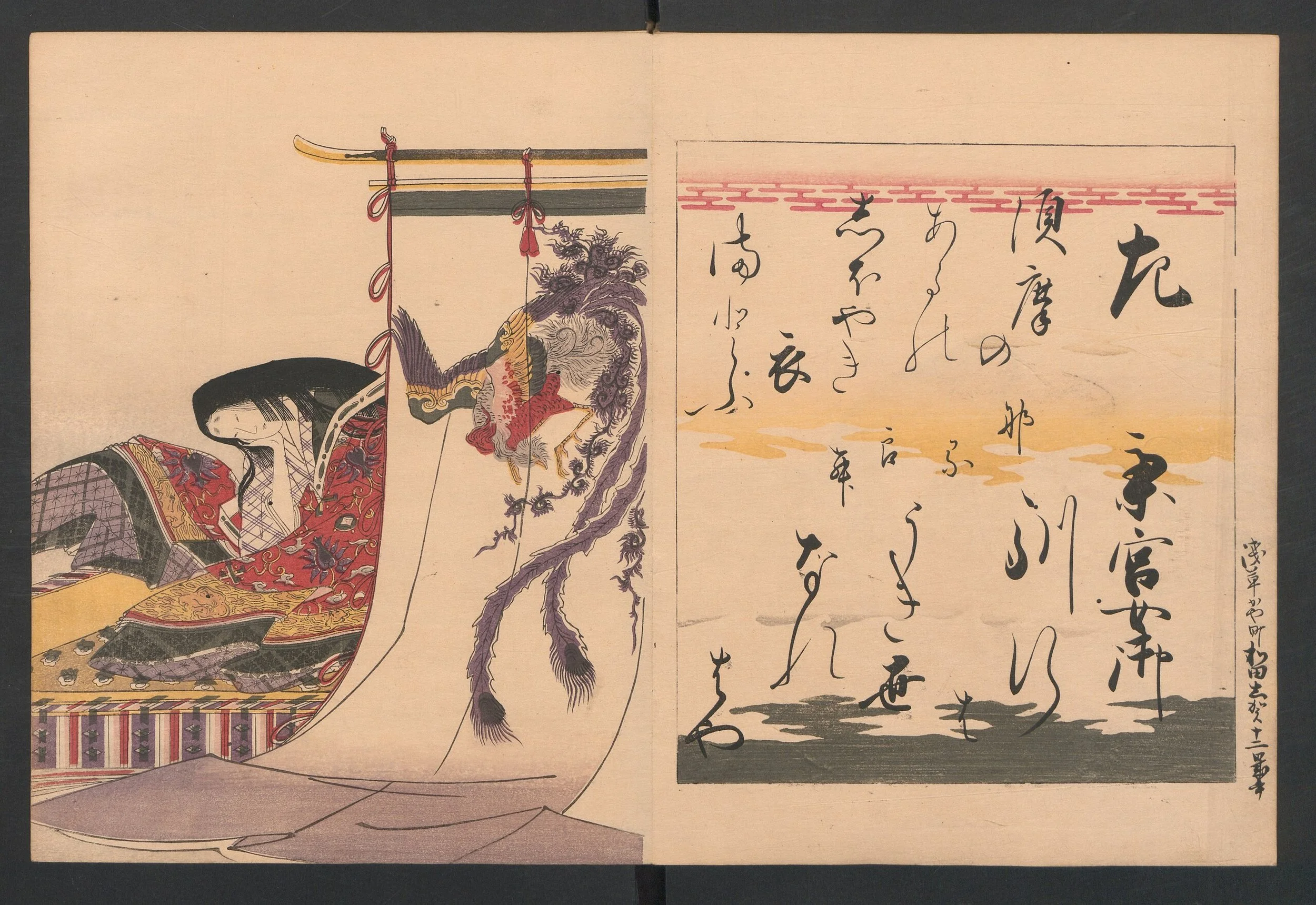
Saigū no Nyōgo (Kishi Joō) 斎宮女御
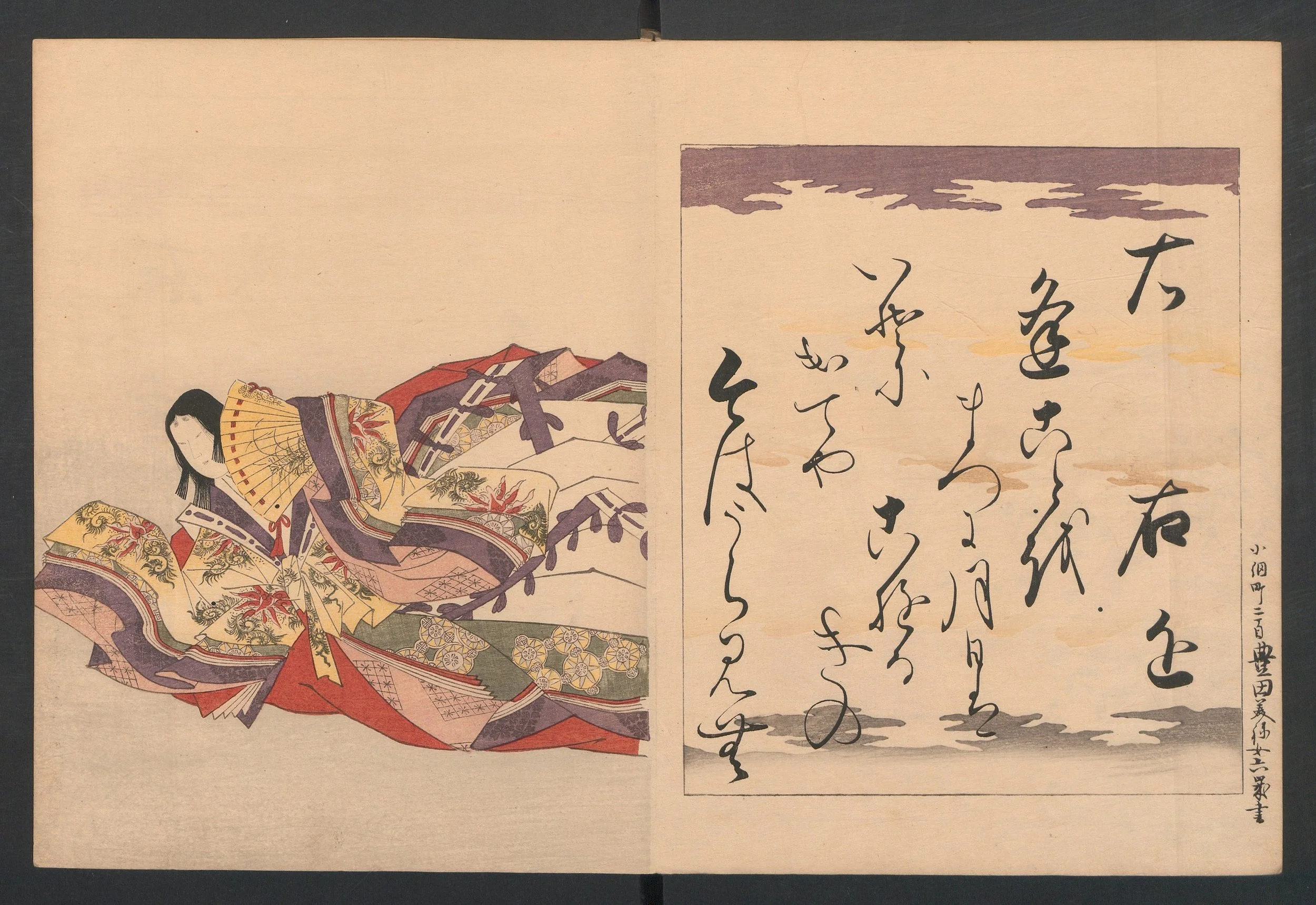
Ukon 右近
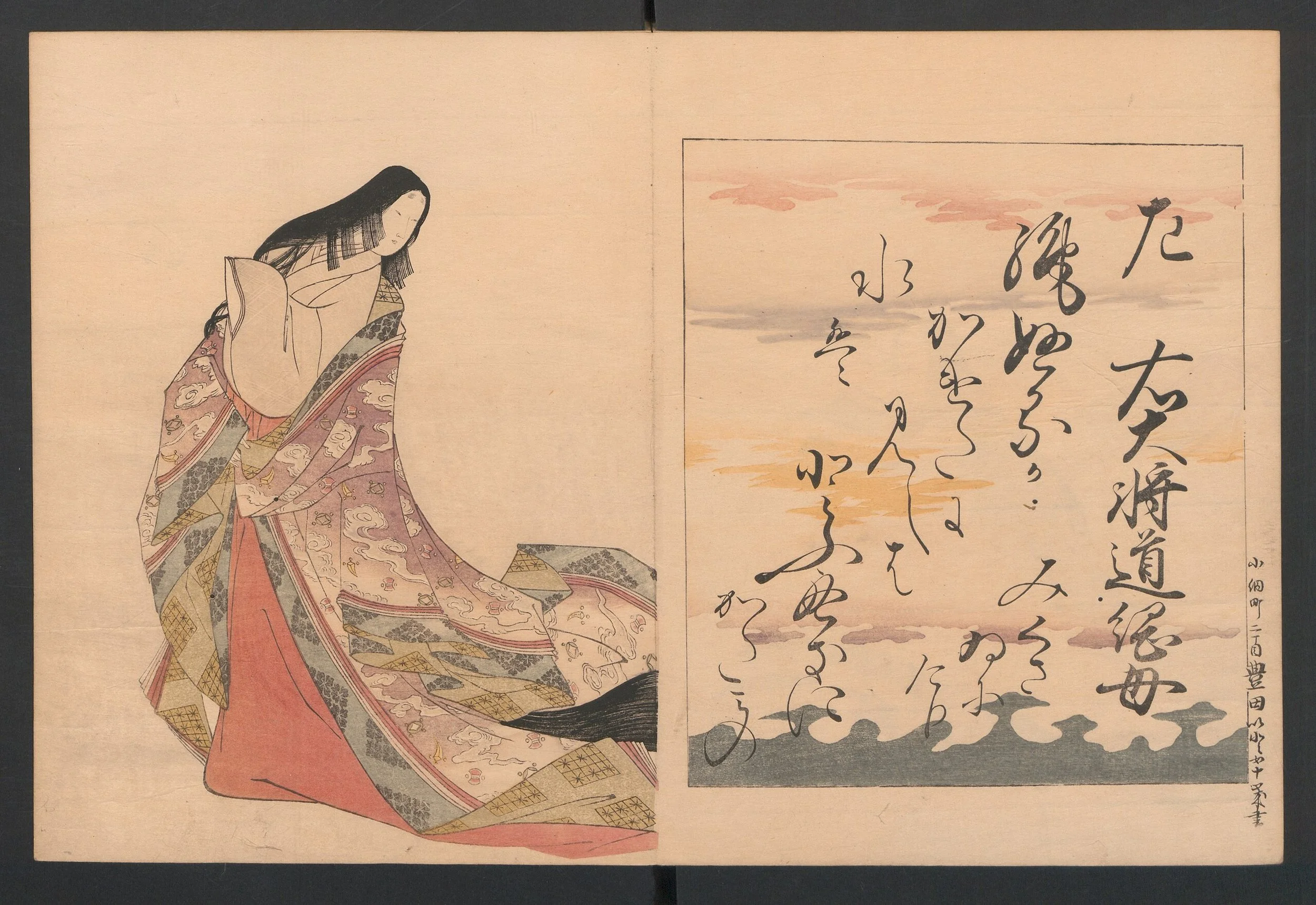
Fujiwara no Michitsuna no Haha 右大将道綱母
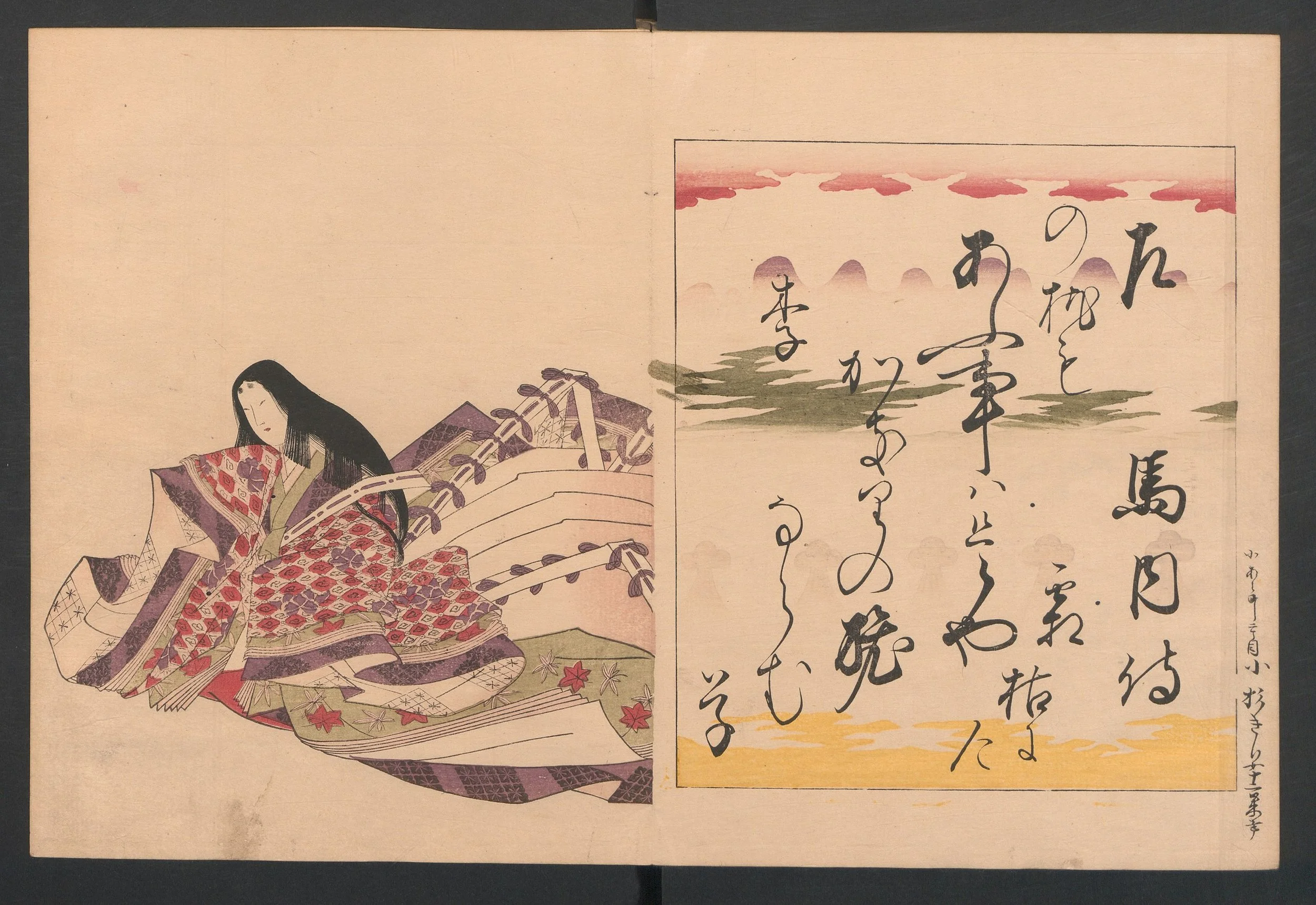
Uma no Naishi 馬内侍
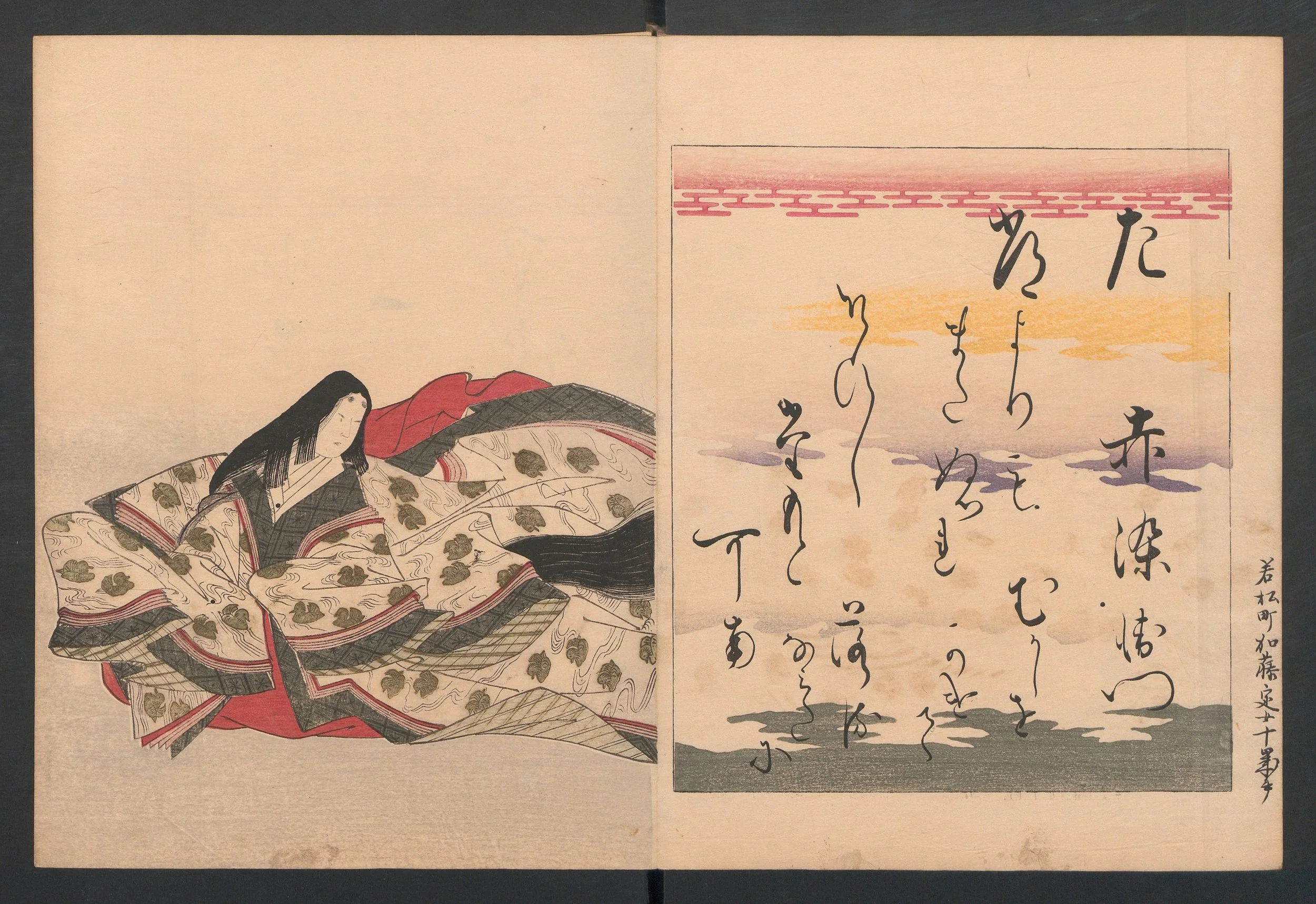
. Akazome Emon 赤染衛門

Izumi Shikibu 和泉式部

Kodai no Kimi 三条院女蔵人左近 小大君

11. Murasaki Shikibu 紫式部
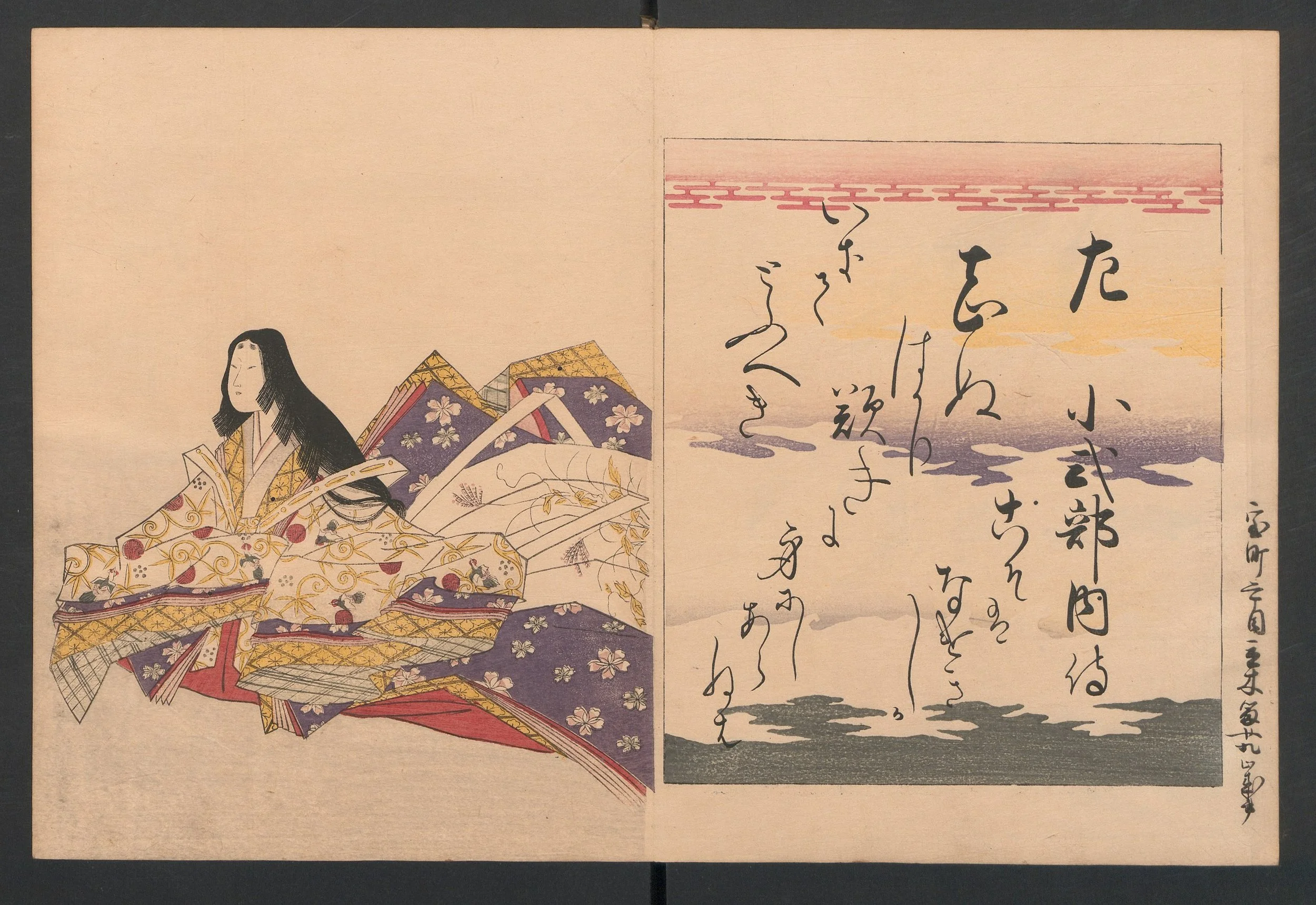
Koshikibu no Naishi 小式部内侍
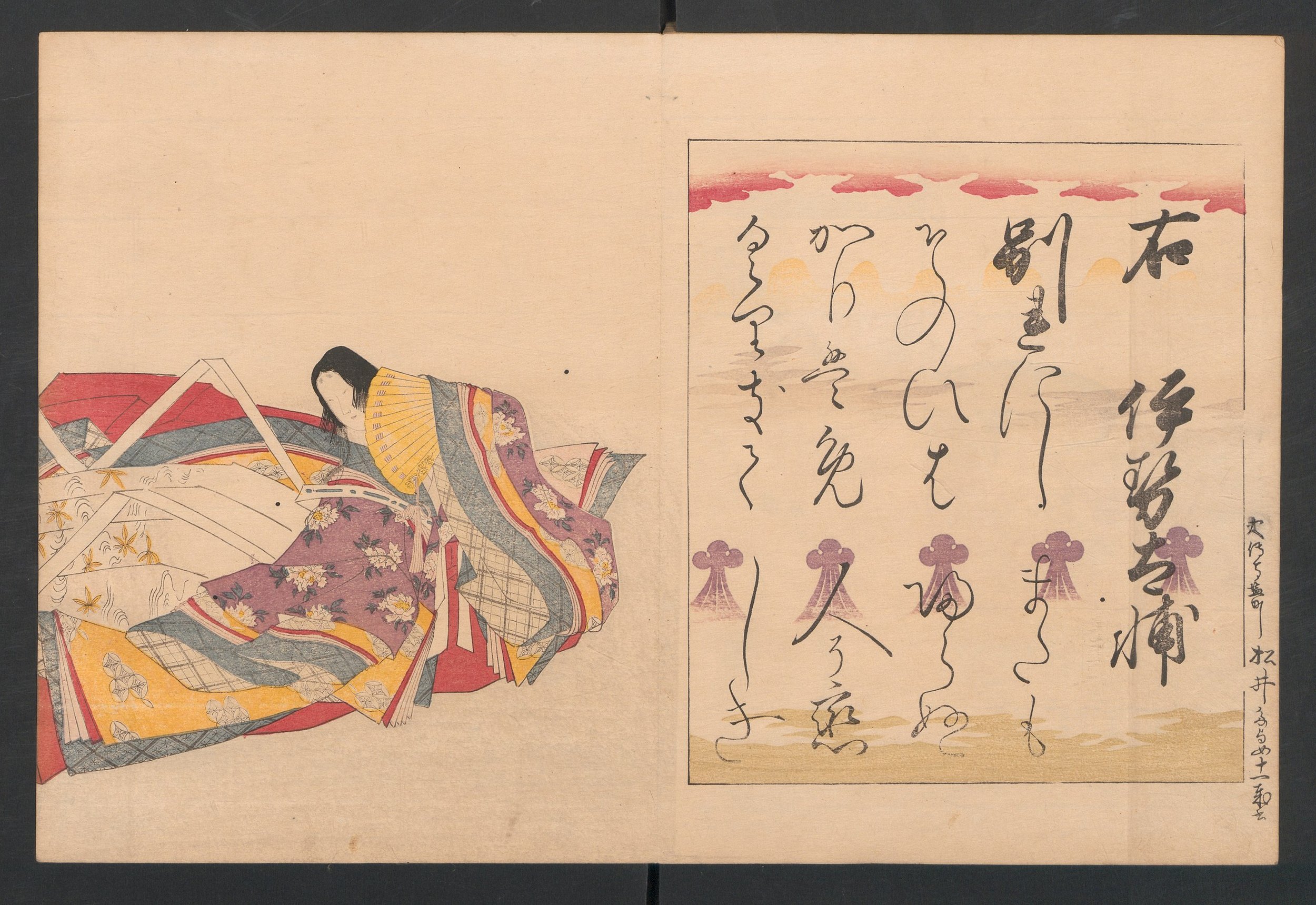
Ise no Taifu 伊勢大輔
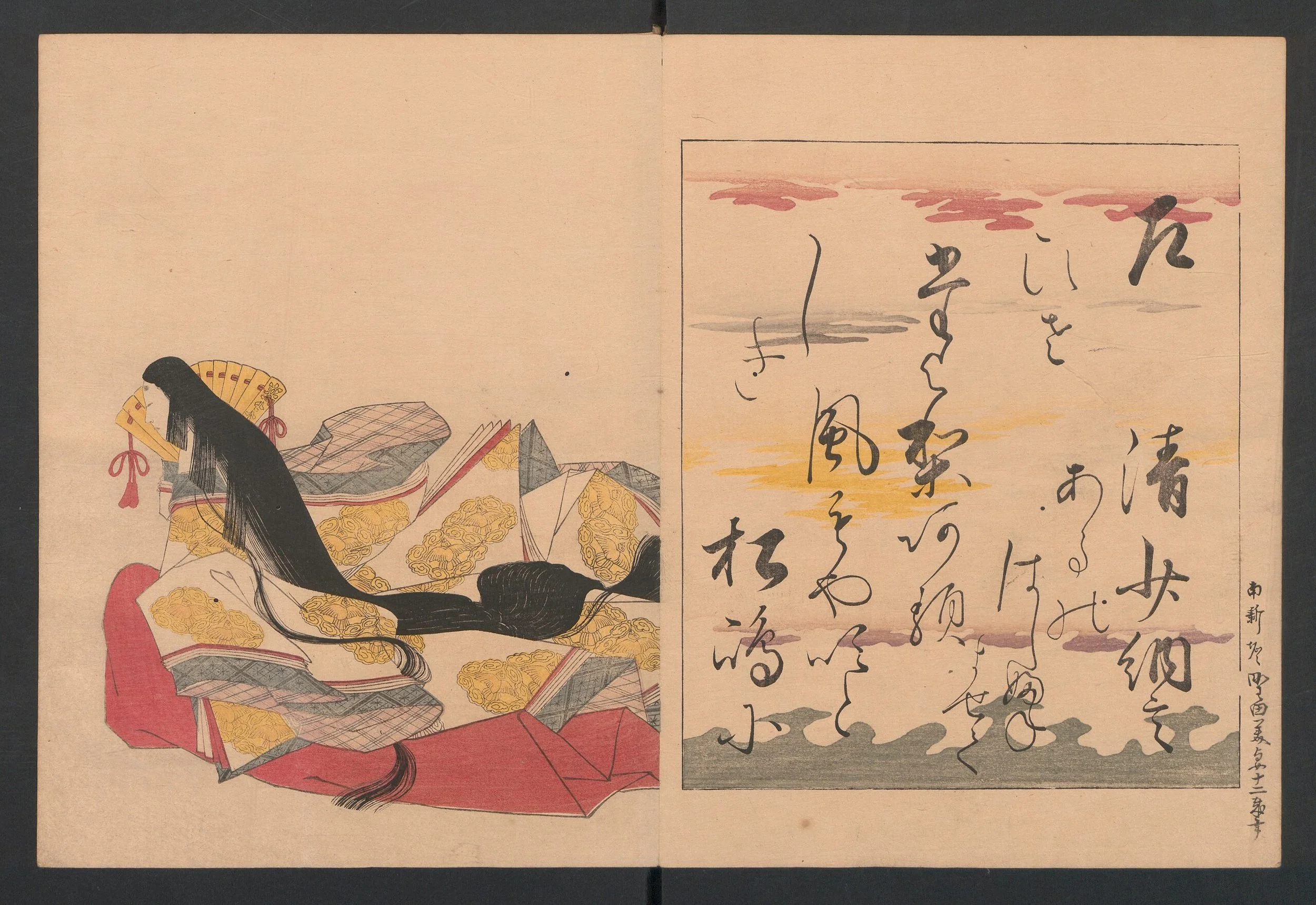
Sei Shōnagon 清少納言
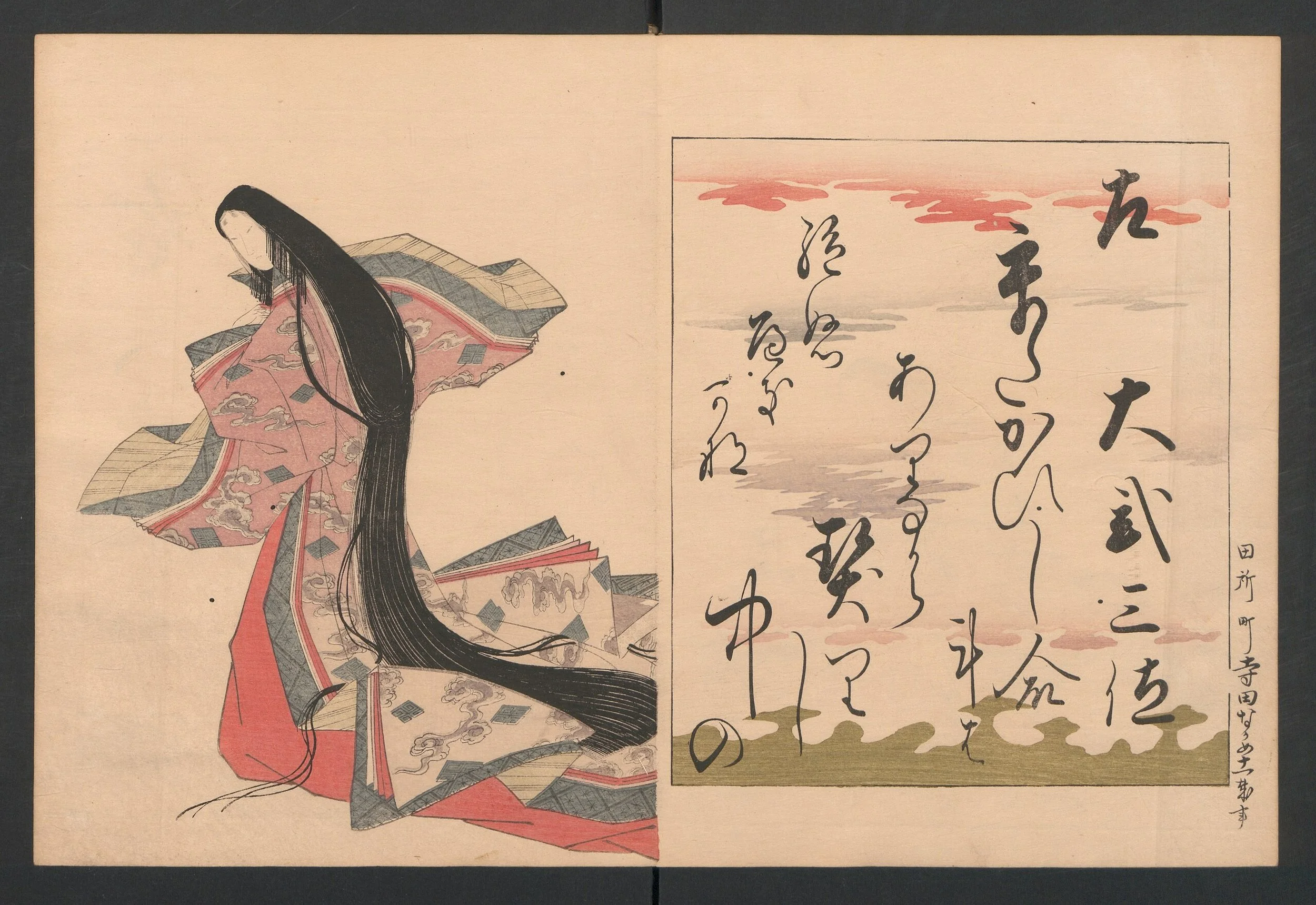
Daini no Sanmi 大弐三位
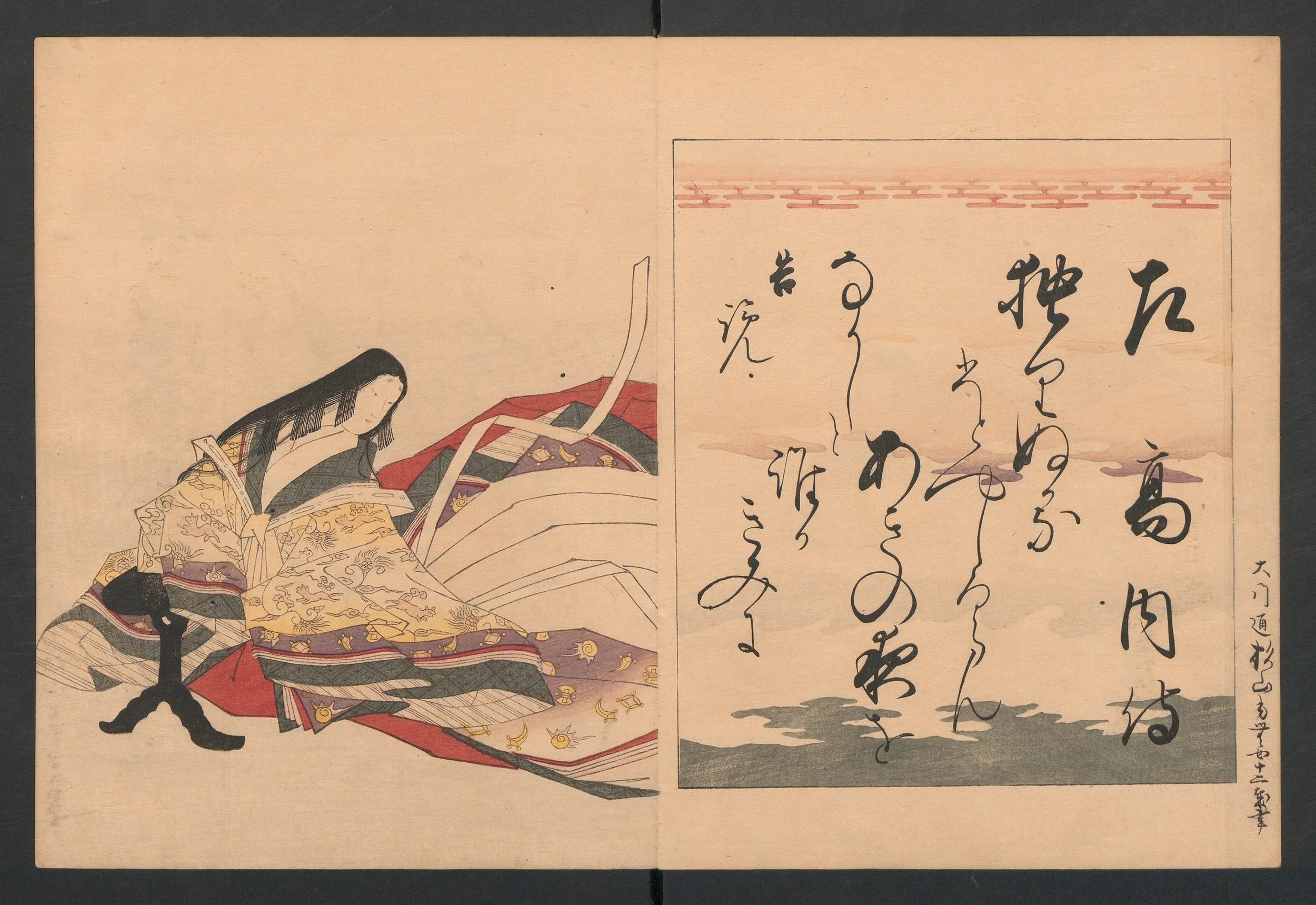
Takashina no Takako 高内侍

ūshi Naishinnō-ke no Kii 一宮紀伊

Sagami 相模

Princess Shikishi (Shikishi Naishinnō) 式子内親王
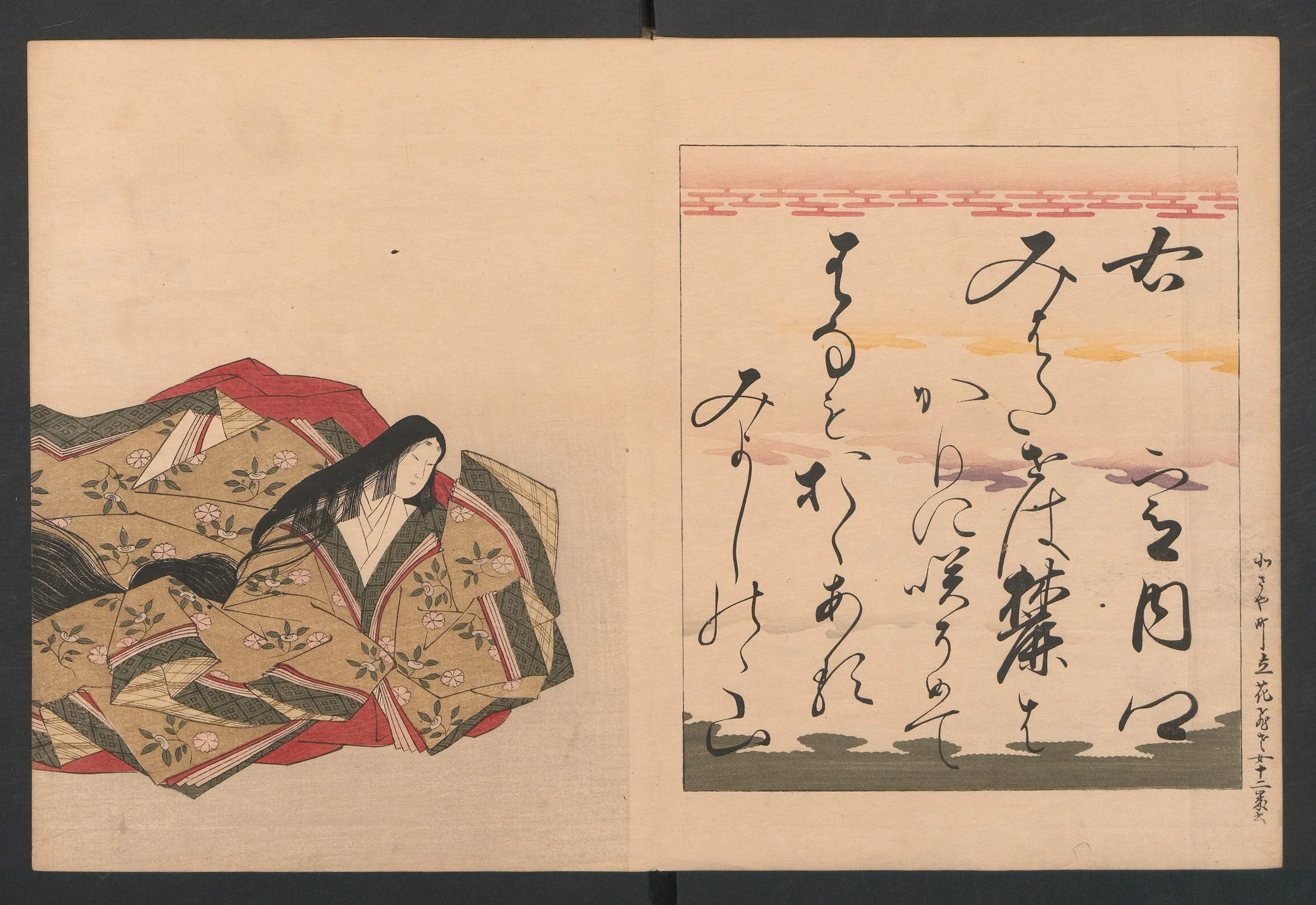
Kunai-kyō 宮内卿
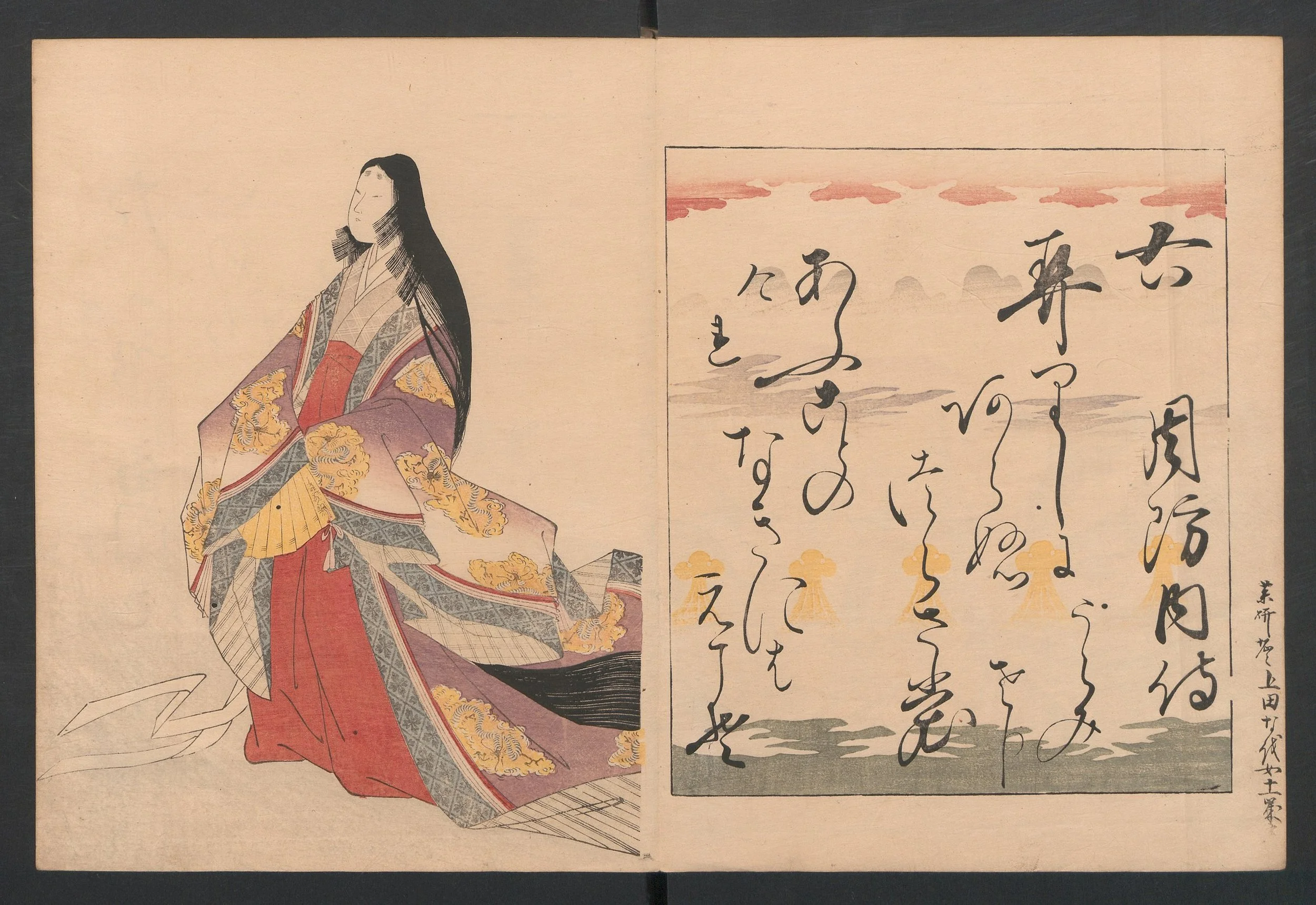
Suō no Naishi 周防内侍(平仲子

Taikenmon'in no Horikawa 待賢門院堀河
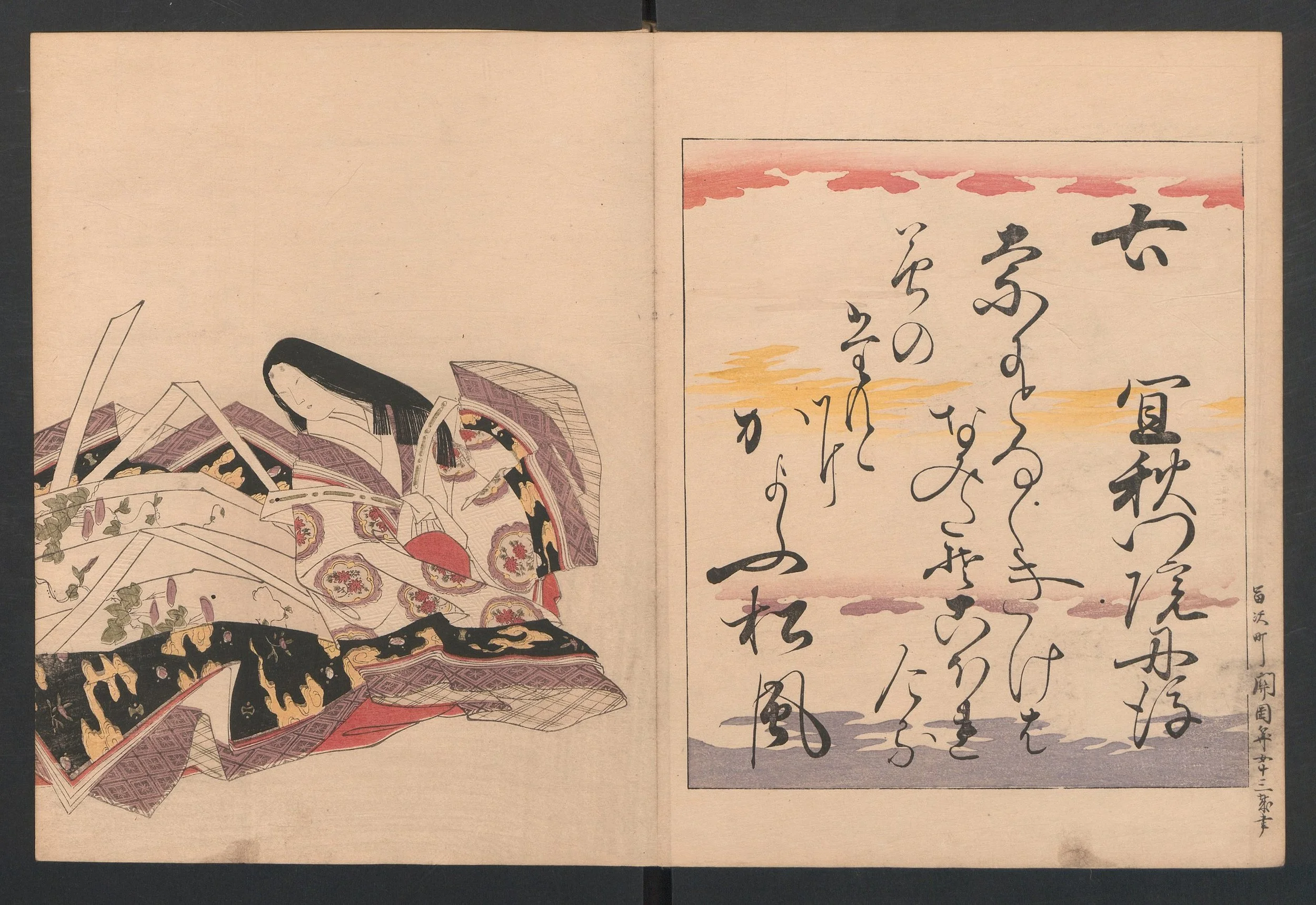
Gishūmon'in no Tango 宜秋門院丹後
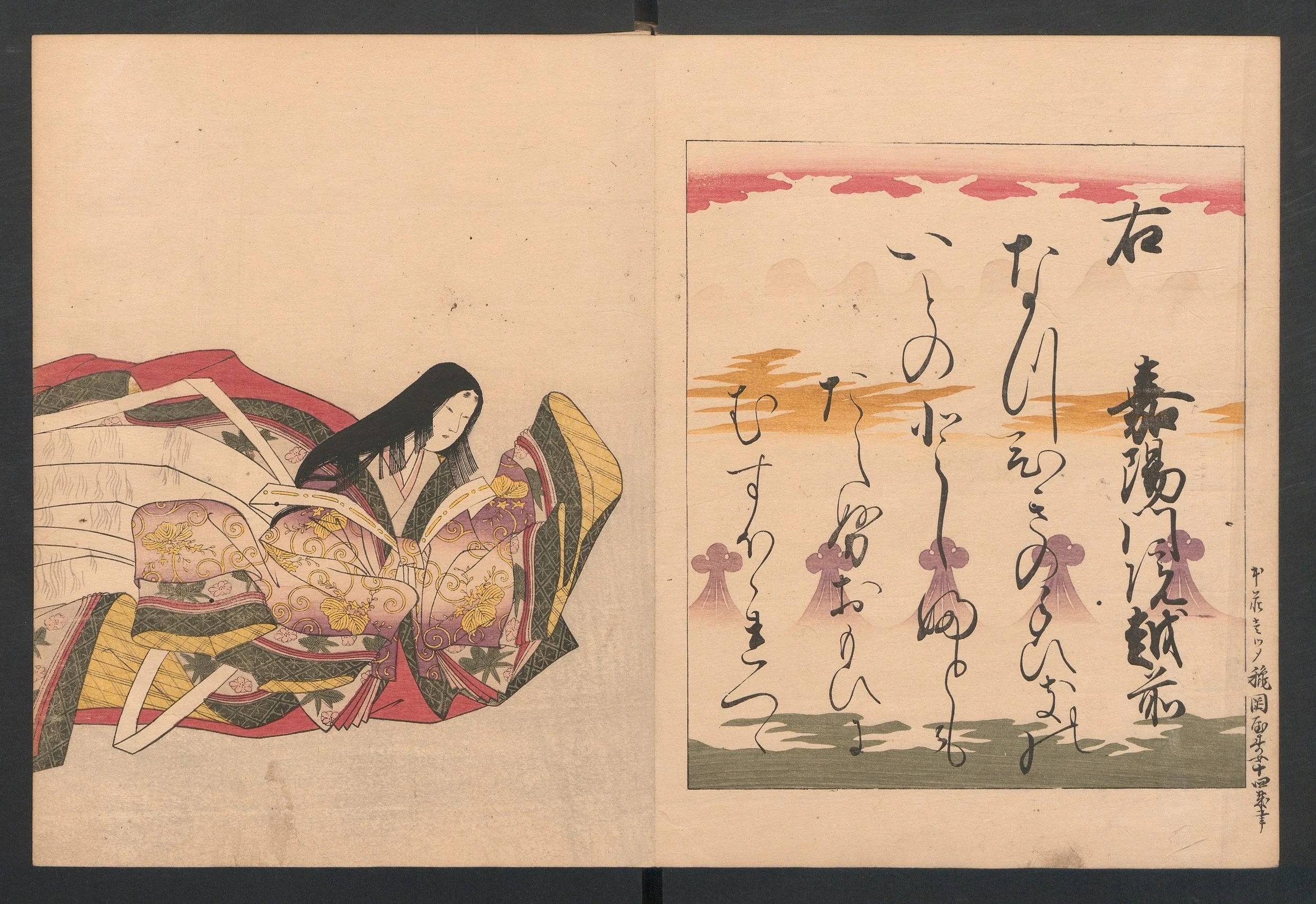
Kayōmon'in no Echizen 嘉陽門院越前
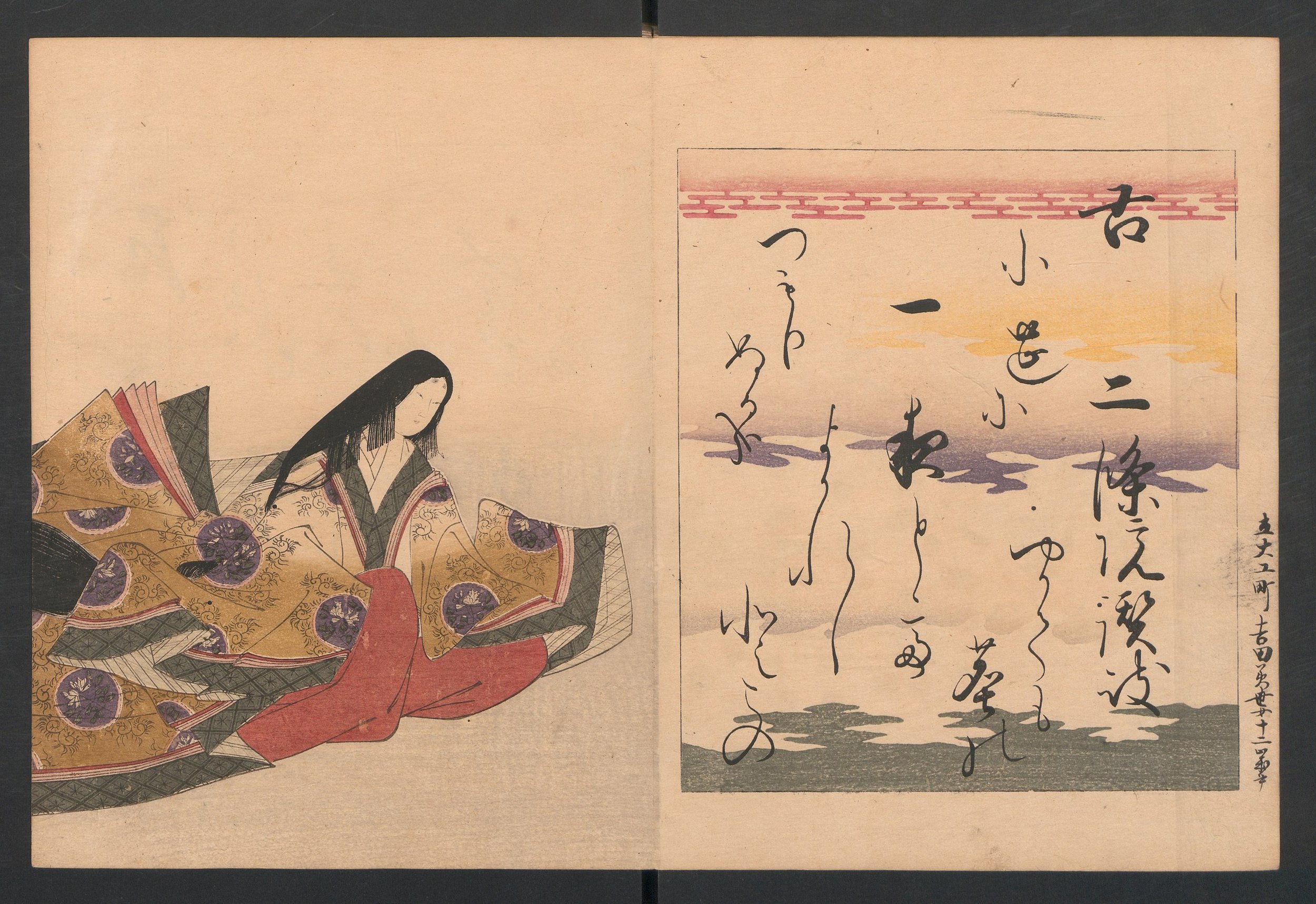
Nijōin no Sanuki 二条院讃岐
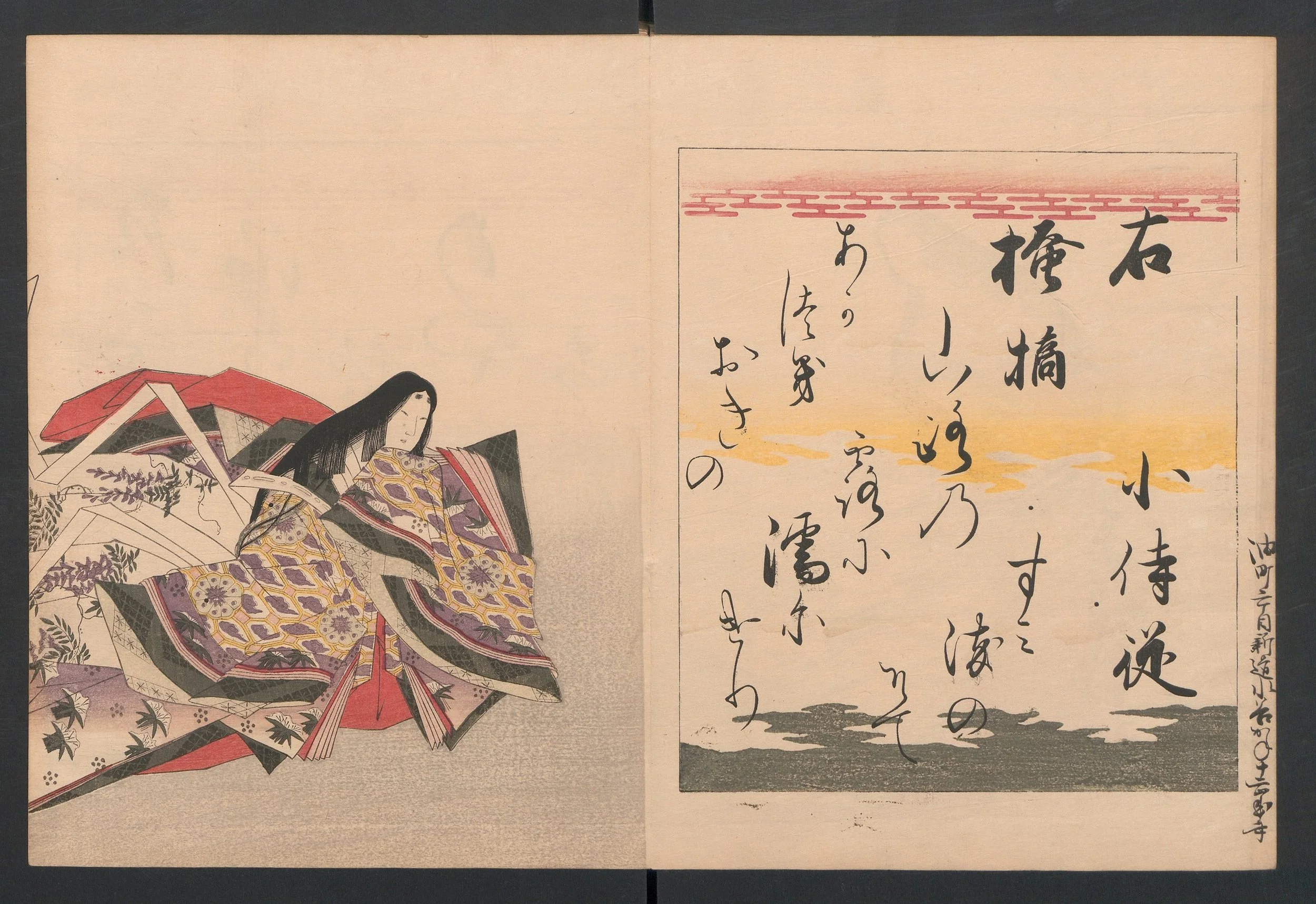
Kojijū 小侍従
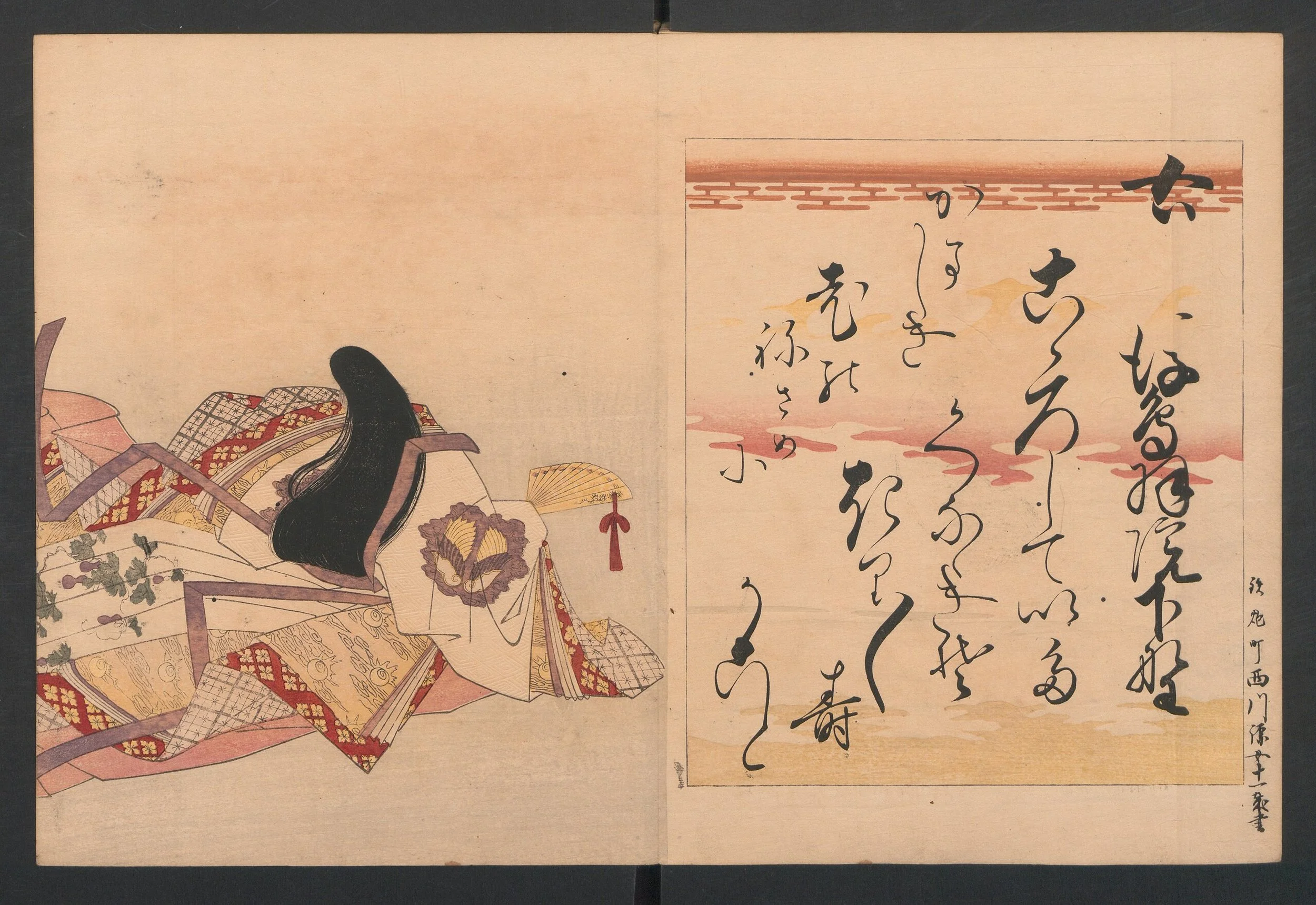
Go-Toba-in no Shimotsuke 後鳥羽院下野

Ben no Naishi 弁内侍
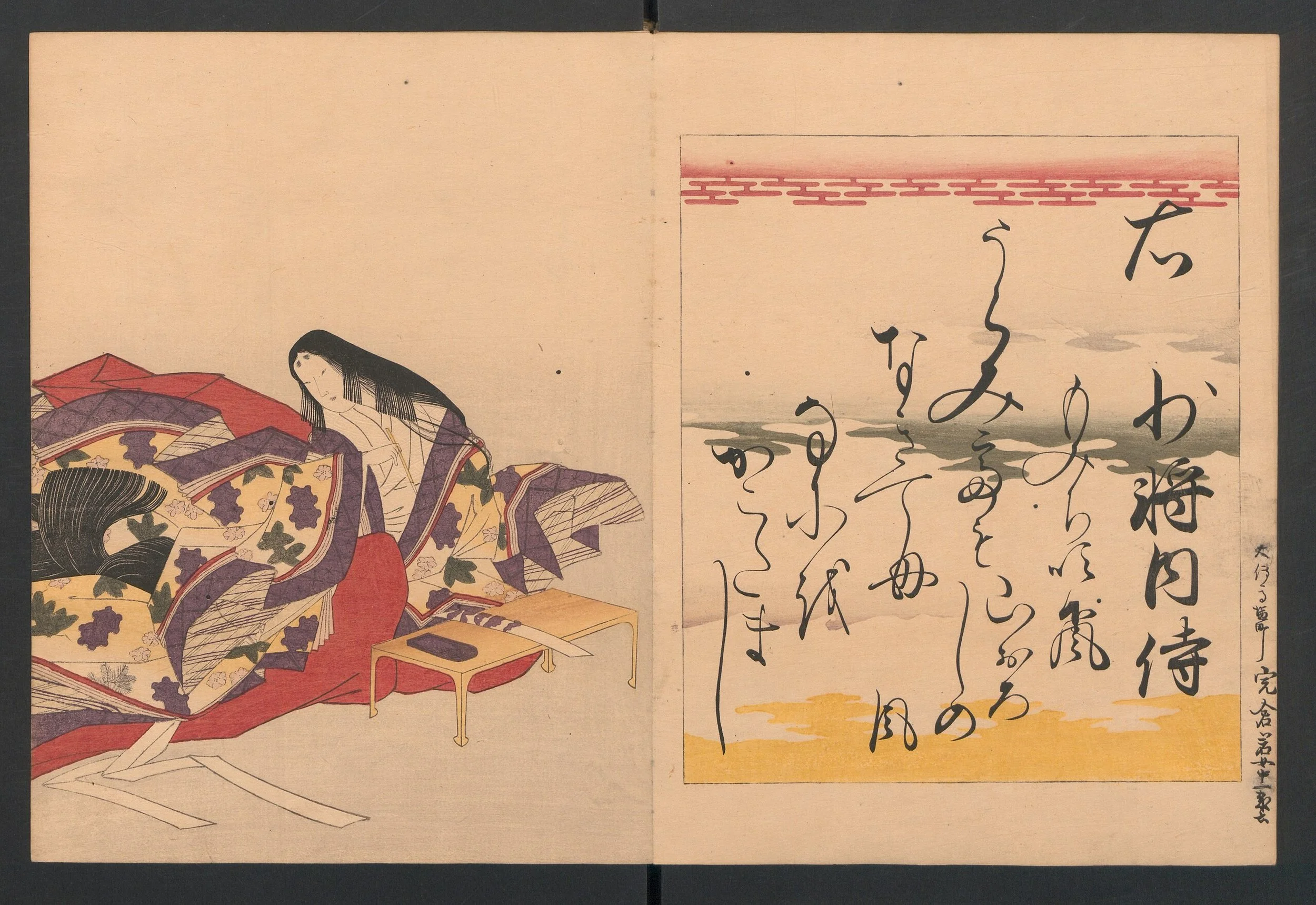
Gofukakusa-in no shōshō no naishi 少将内侍
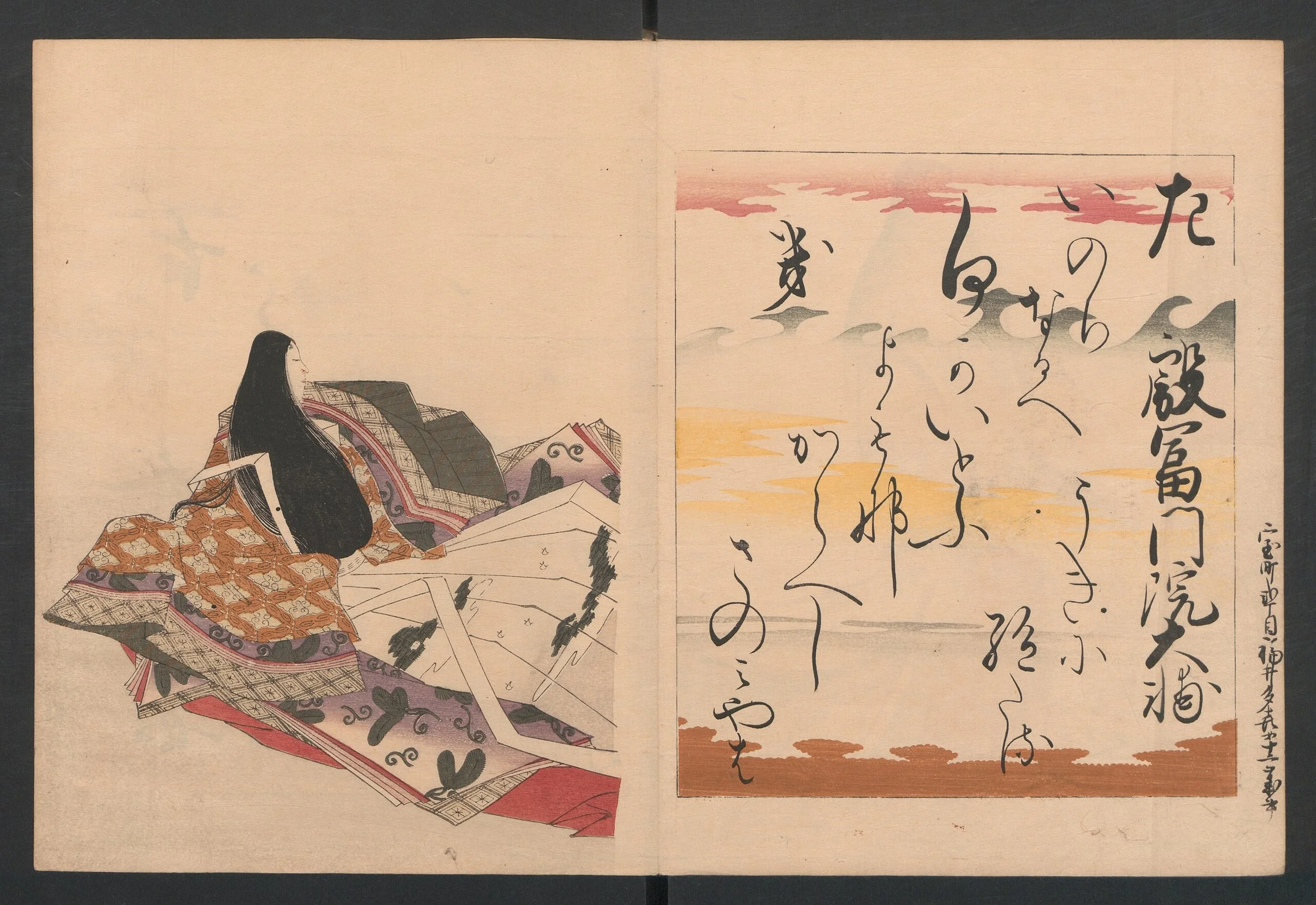
Inpumon'in no Tayū 殷富門院大輔
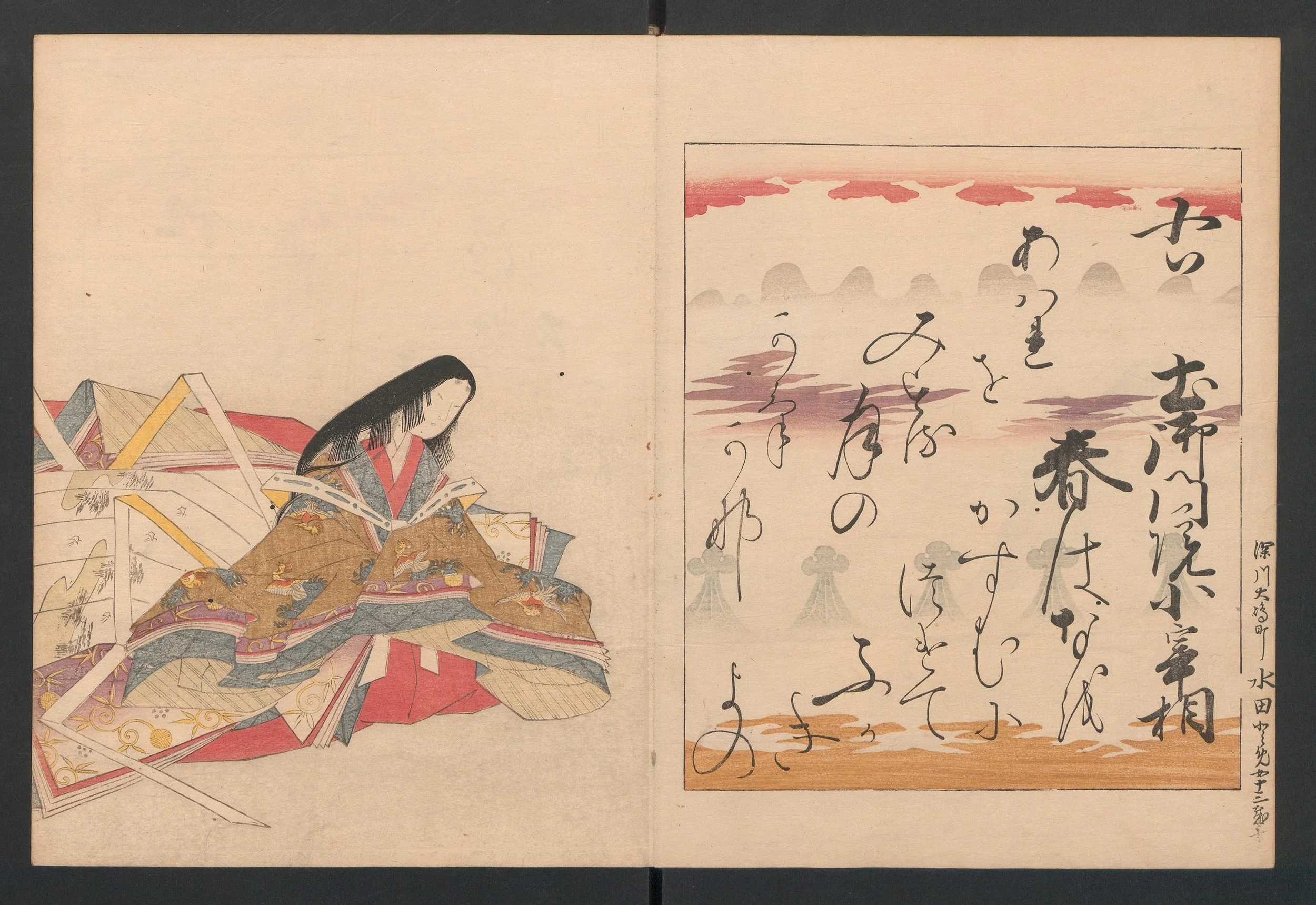
Tsuchimikado In no Kosaishō 土御門院小宰相
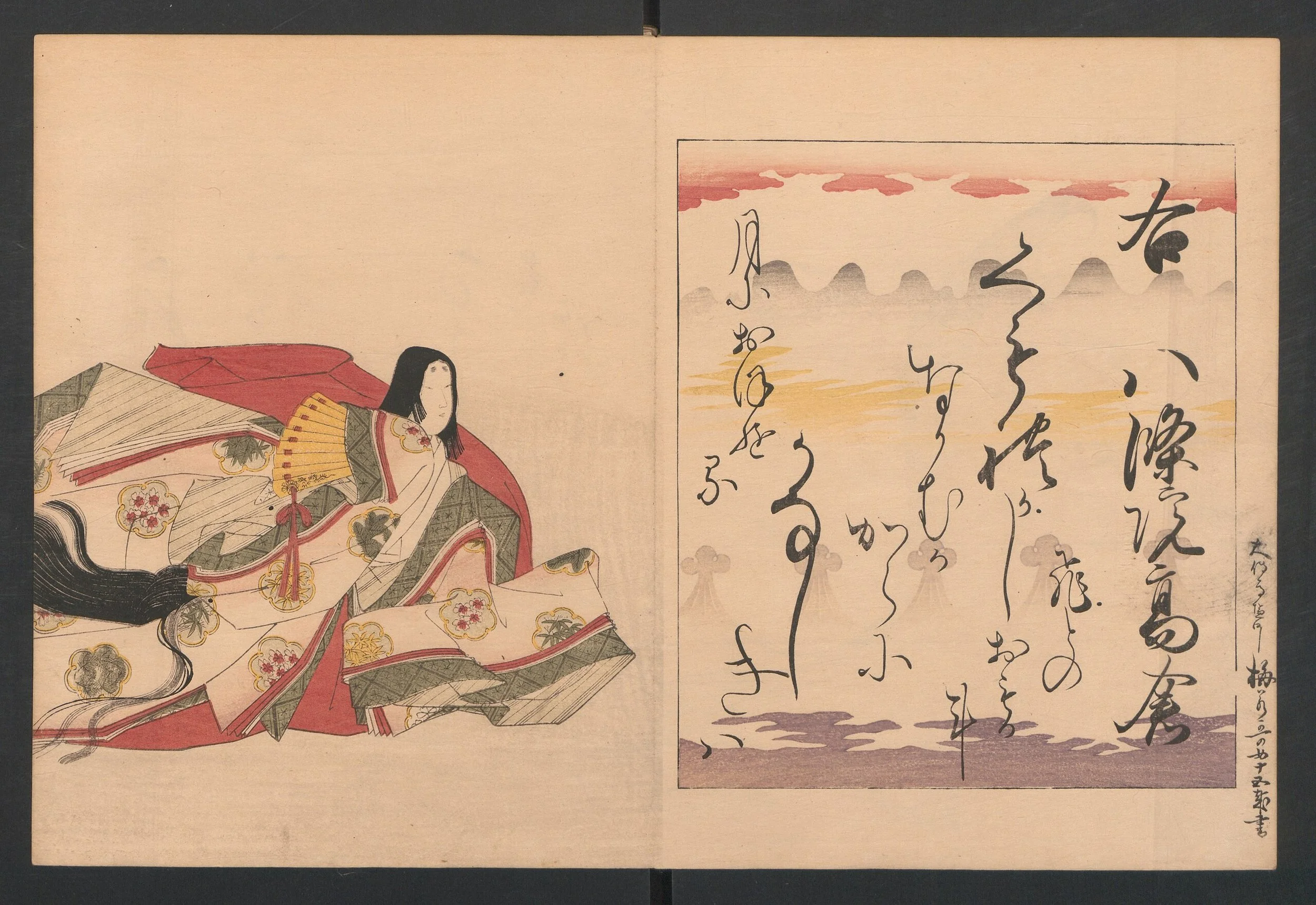
Hachijō-in Takakura 八条院高倉
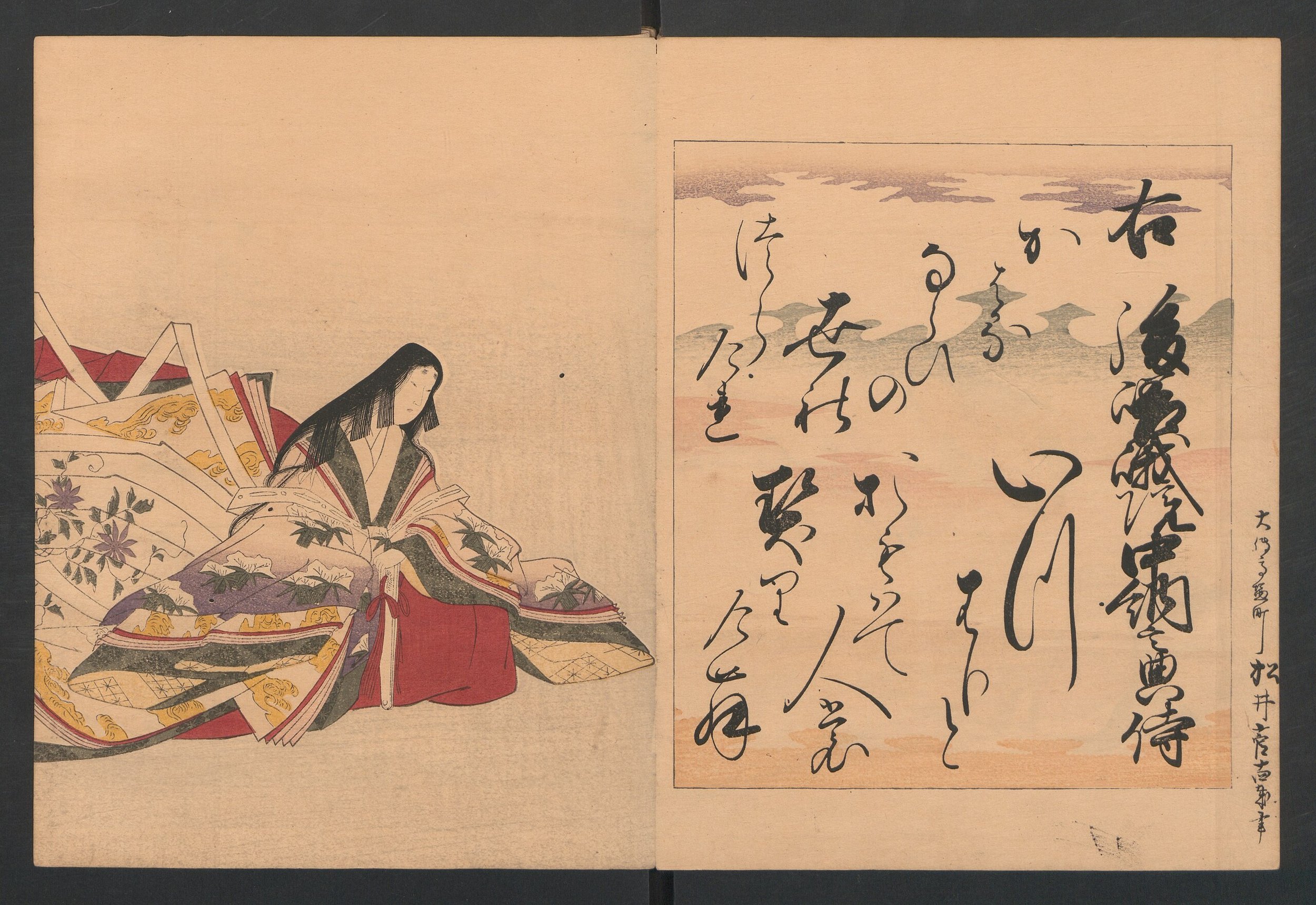
Fujiwara no Chikako 後嵯峨院中納言典侍(典侍藤原親子)
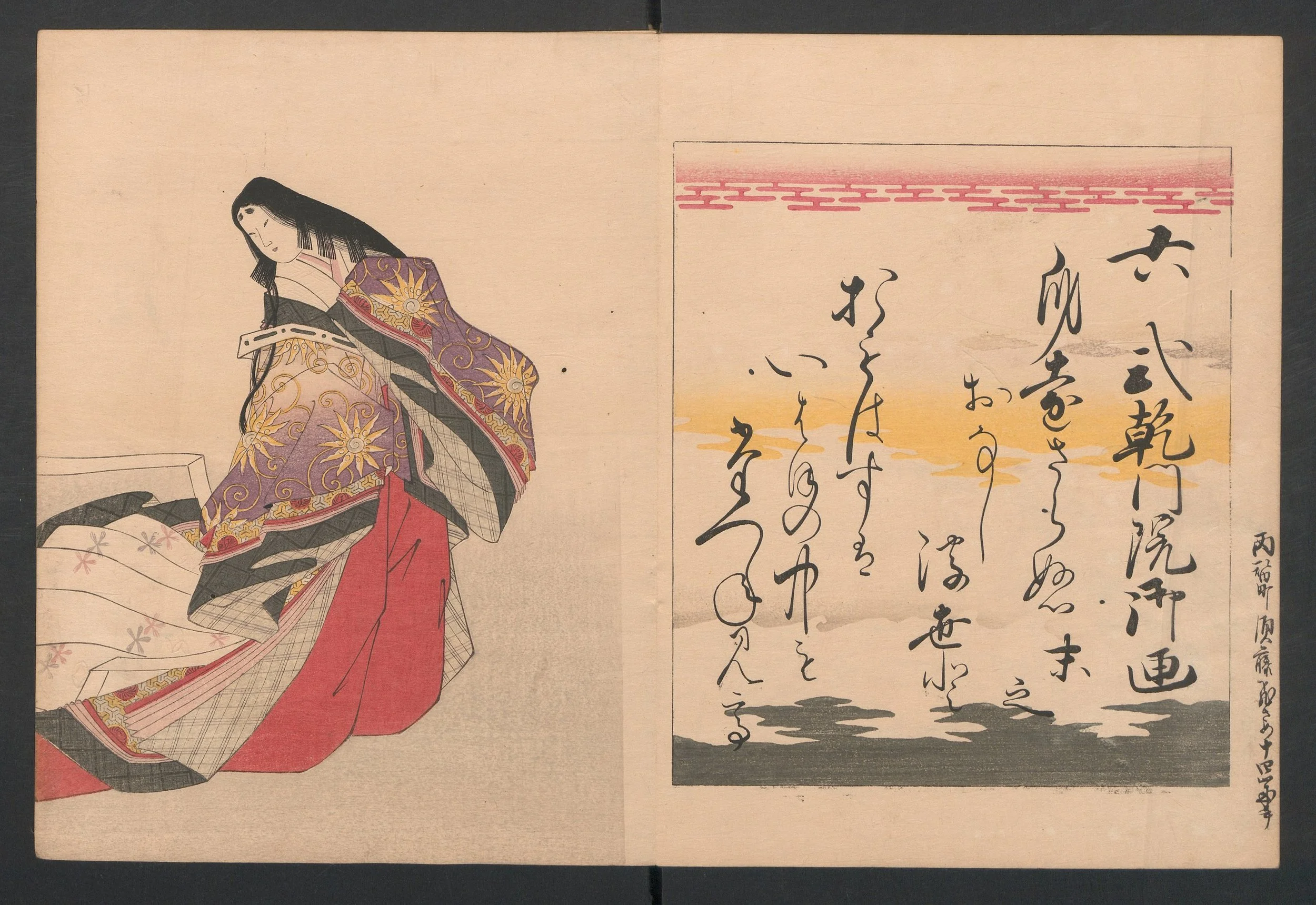
Shikikenmon'in no Mikushige 式乾門院御匣
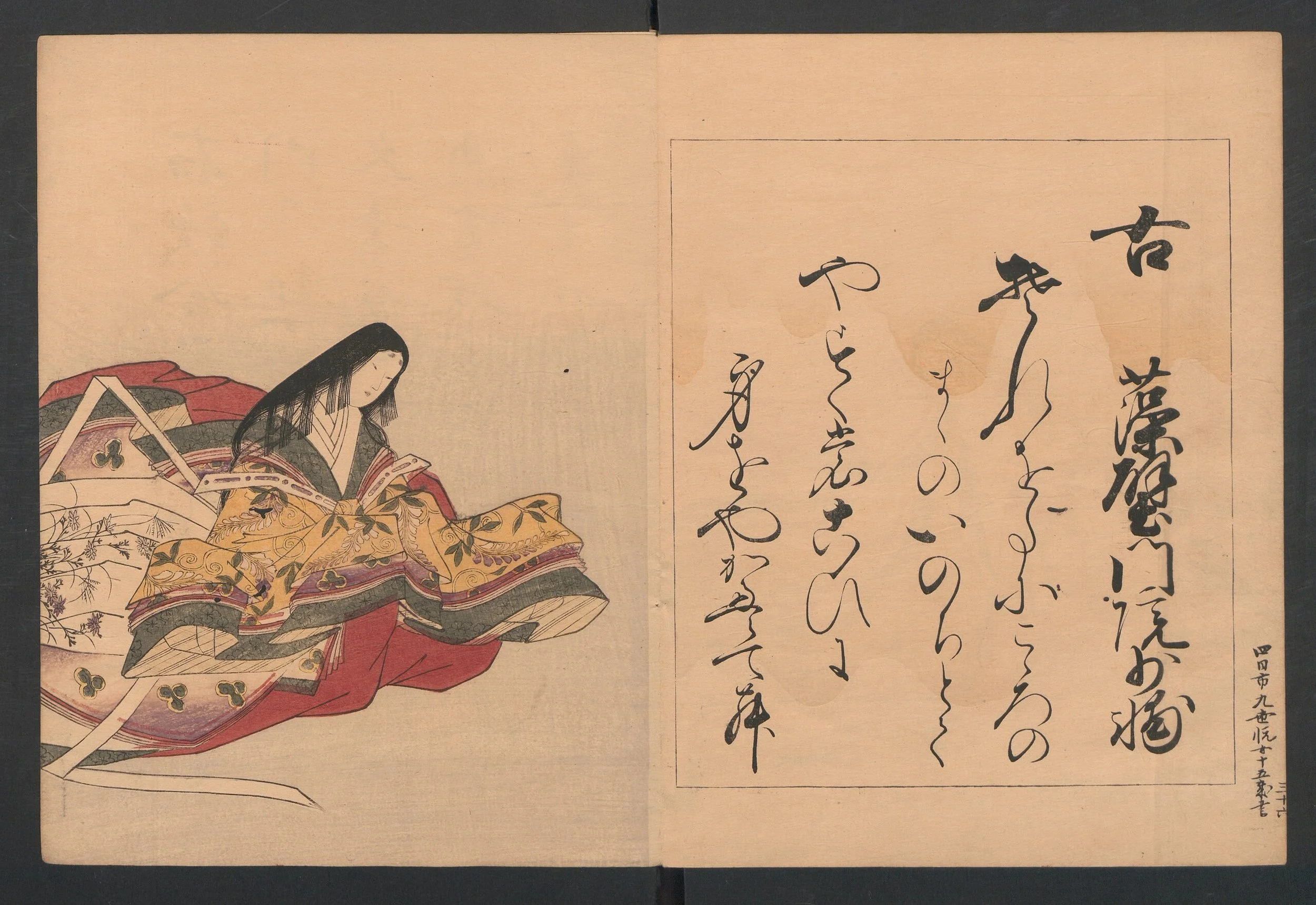
Sōhekimon'in no Shōshō 藻璧門院少将